
The term DSP is an abbreviation that holds different meanings across various industries. The two primary interpretations (DSP meaning) are Demand-side Platform and Digital Signal Processing. Each of these meanings has distinct applications and implications within their respective fields. This article aims to elucidate both interpretations, providing a comprehensive understanding of DSP.
Contents
In the realm of digital advertising, DSP stands for Demand-side Platform. A DSP is a technology platform that allows marketers to buy advertising space in an automated fashion. This system enables advertisers to manage multiple ad exchanges and data exchange accounts through a single interface.
How DSP works in advertising
A DSP processes data from multiple sources, leveraging algorithms to determine the best ad placements. It takes into account various factors, such as user behavior, target demographics, and campaign goals, to optimize ad performance.
Digital Signal Processing is another critical interpretation of DSP, predominantly used in engineering and technology fields. DSP involves the manipulation and processing of signals, such as audio, video, and sensor data, to improve or transform the information.
Applications of DSP technology
DSP technology is essential in a wide range of applications, including audio processing, telecommunications, and data compression. It involves converting analog signals into digital form, processing the digital signals, and converting them back to analog if necessary.
While Demand-side Platform and Digital Signal Processing operate in vastly different domains, they share a common foundation in processing and analyzing large volumes of data. Both DSPs aim to optimize performance, whether in advertising or signal processing.
Google Marketing Platform
Google Marketing Platform is a comprehensive suite that includes a DSP known as Display & Video 360 (DV360). It allows advertisers to buy display, video, and mobile ads across a wide range of websites and platforms.
The Trade Desk
The Trade Desk is a leading DSP that provides access to a vast range of ad inventories. It offers robust tools for targeting, analytics, and campaign management, making it a popular choice for advertisers looking to optimize their digital marketing efforts.
MediaMath
MediaMath is another prominent DSP that focuses on programmatic advertising. It offers advanced data management capabilities, allowing marketers to efficiently target and reach their desired audiences.
Amazon Advertising
Amazon Advertising includes a DSP that enables advertisers to programmatically buy display, video, and audio ads both on and off Amazon. It leverages Amazon’s extensive data to provide precise audience targeting.
Adobe Advertising Cloud
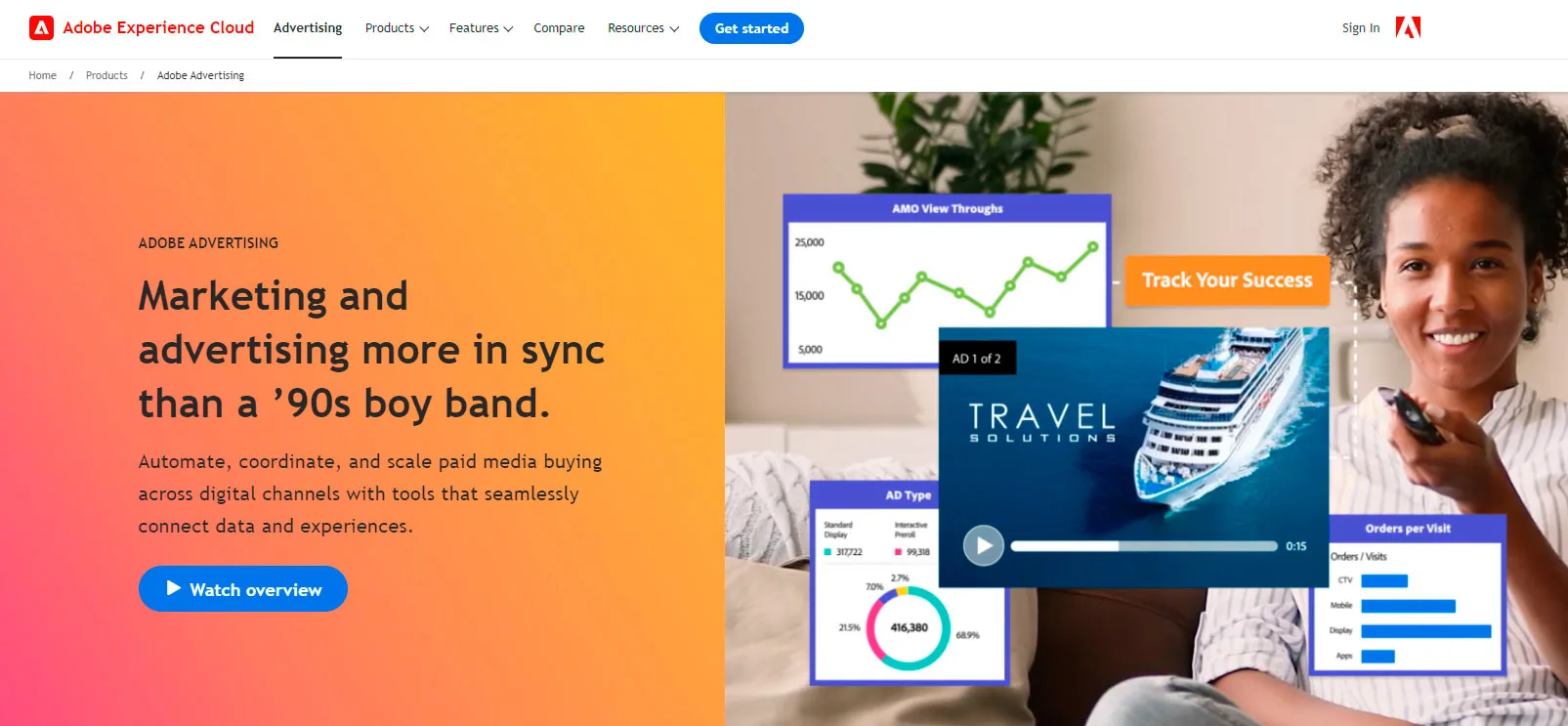
Adobe Advertising Cloud is a DSP that integrates with Adobe’s suite of marketing tools. It offers solutions for search, display, video, and social advertising, providing a unified platform for managing ad campaigns.
AppNexus (now part of Xandr)
AppNexus, now integrated into Xandr’s offerings, is a versatile DSP that supports various ad formats and devices. It provides powerful targeting and analytics tools to enhance the effectiveness of advertising campaigns.
Verizon Media (formerly Oath, now part of Yahoo)
Verizon Media’s DSP allows advertisers to access premium inventory across various channels, including display, video, and native advertising. It offers advanced targeting options and comprehensive analytics.
These DSPs are widely used in the digital advertising industry, offering diverse capabilities to optimize and manage ad campaigns effectively.
Demand-side Platforms (DSPs) offer powerful data and analytics capabilities that can be leveraged to benefit businesses. Consulting agencies like Markswebb are ideally positioned to integrate these capabilities into their services, enhancing digital marketing and advertising strategies for their clients.
User research and behavior analysis
Integrating DSP data with user research provides detailed insights into audience behavior and preferences. This information helps craft effective advertising campaigns that influence user behavior to achieve business goals.
Best practices and benchmarking
By incorporating best practices and benchmarking within the DSP framework, Markswebb can identify effective advertising strategies across different niches. This helps clients adopt market-leading solutions that enhance their digital service experiences.
UX audit and interface optimization
Markswebb's UX audits can be complemented by DSP analytics to identify growth opportunities in digital advertising interfaces. This ensures an optimized user experience within digital services and advertising touchpoints.
Metrics consulting and analytical tools
Combining DSP capabilities with advanced analytical tools, Markswebb provides tailored strategies for business metrics. Using DSP data to track and measure advertising campaign effectiveness offers insights that drive strategic decisions. By partnering with Markswemm, you gain access to a wealth of knowledge and a toolkit refined through years of success in the industry, ensuring your projects not only meet but exceed expectations.
Reach out to Markswebb to enhance your digital offerings.
Understanding the dual meanings of DSP is crucial for professionals across various industries. Whether referring to Demand-side Platforms in digital advertising or Digital Signal Processing in engineering, DSP represents a key component in optimizing and improving technological applications. This multifaceted term underscores the importance of context in interpreting and applying DSP technologies effectively.
Our collection of articles, FAQs, and glossaries offers clear, concise explanations of widely used terms and concepts. Beyond definitions, the Handbook MW is a portal to understanding how these terms apply in real-world scenarios.
From research and analysis to strategy and design, we help our clients successfully reach their customers through digital services.
We respond to all messages as soon as possible.