
The phrase "How Might We" (HMW) represents a powerful tool in the field of design thinking, especially pertinent to user experience (UX) and product design within the fintech sector. It helps frame design challenges in a way that is open-ended yet directed towards actionable insights. Originating from Procter & Gamble and later adopted by design leaders at IDEO and Stanford, HMW questions encourage teams to rethink and optimize how they approach problem-solving, fostering an environment of collaborative ideation.
Contents
HMW questions are integral to both design thinking and design sprints, methodologies that prioritize human-centered design. By asking, "How might we solve the problem?" design teams use HMW to reframe pain points and challenges into opportunities for innovation. This method supports the sprint process by mapping out customer journeys and pinpointing real user needs and experiences.
A `How Might We` (HMW) question is a problem-solving prompt used in design and innovation processes to frame challenges as open-ended, actionable opportunities, encouraging collaborative, creative thinking and focusing on user-centered solutions.
The "How Might We" (HMW) question harnesses the remarkable power of simplicity to address complex UX problems, transforming challenges into creative opportunities for innovation and ensuring solutions are both user-centric and collaborative.
In UX design and product management, HMW questions serve as a prompt that guides design efforts towards more empathetic, user-focused outcomes. They are particularly useful in brainstorming sessions where product managers and designers need to generate new ideas and explore different angles of the user experience.
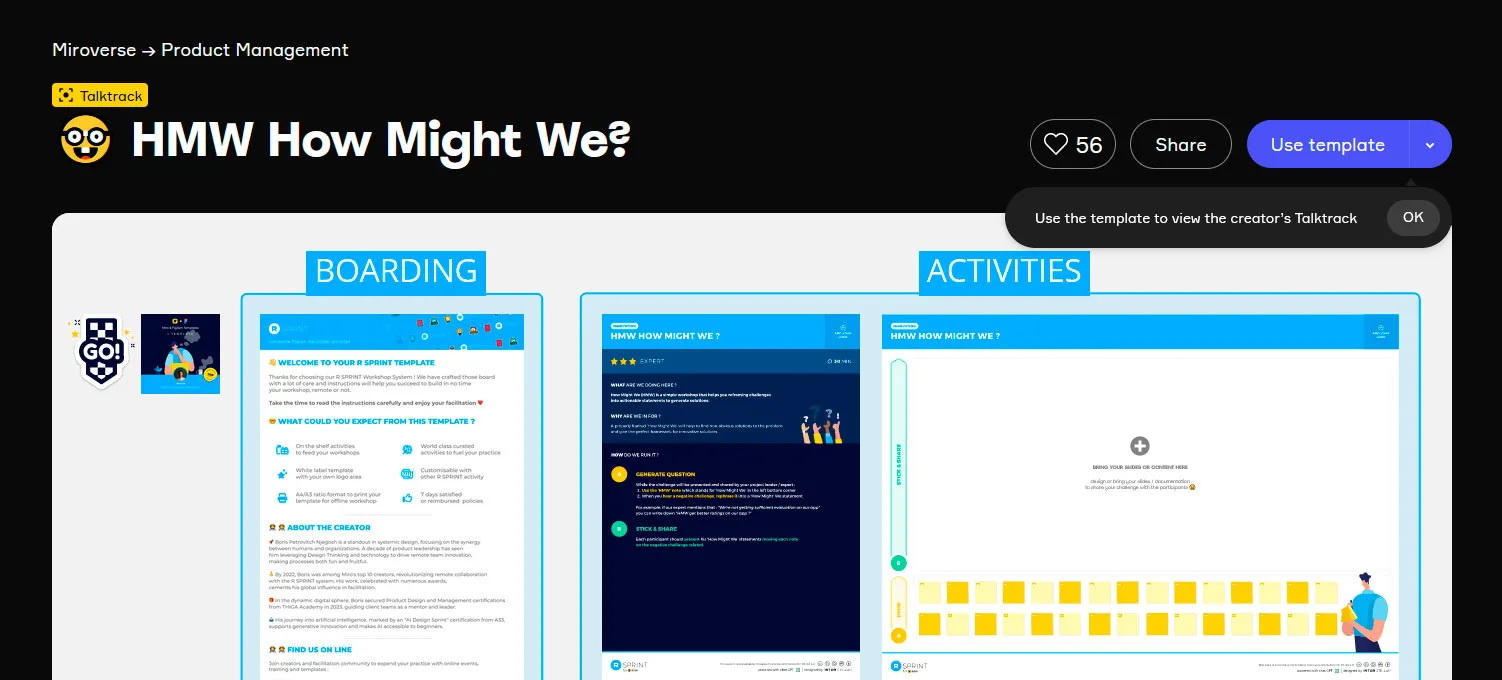
HMW (How Might We) templates are designed to guide teams through the process of framing problems effectively in a brainstorming or design thinking session. Here’s a typical look for an HMW template:
These templates can be used in digital tools like Miro or Figma, which offer interactive and collaborative features, allowing team members to contribute in real-time during remote sessions or in-person workshops.
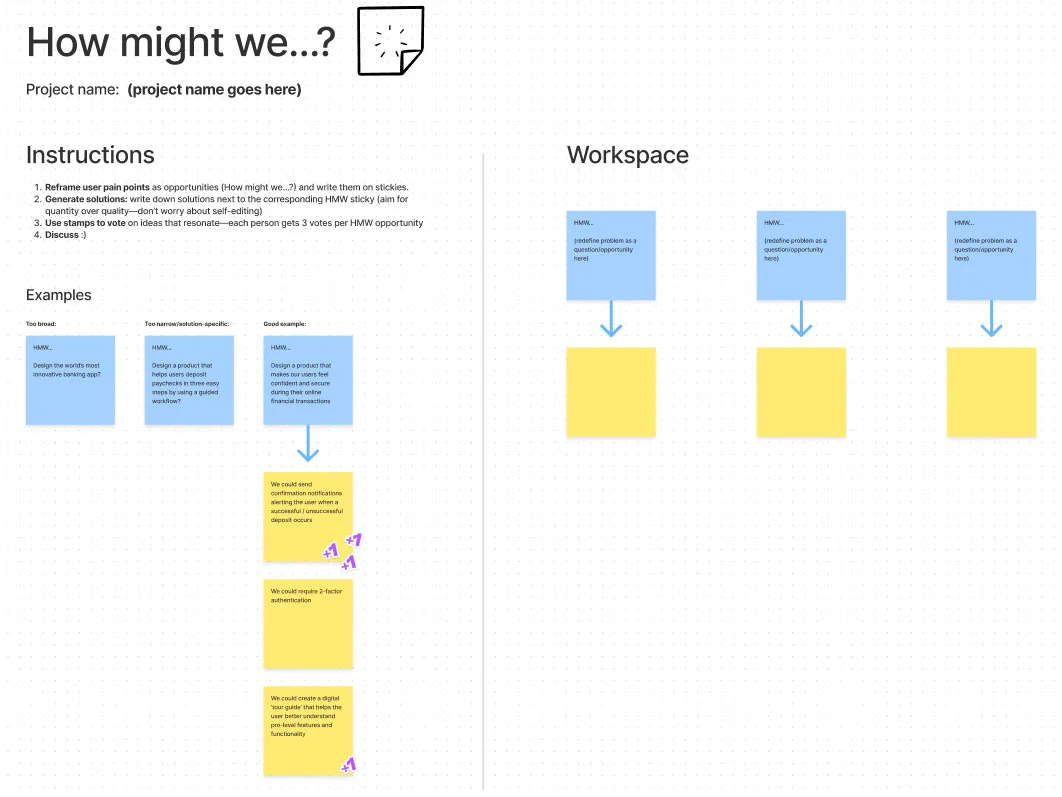
HMW questions push teams to think outside the box and challenge existing paradigms. By framing problems around what might be possible, rather than what is currently done, HMW prompts help unlock creative potential and lead to the development of better products. They also help prioritize design challenges, making it easier for teams to focus on the most impactful issues.
Effective "How Might We" (HMW) questions are those that stimulate creative thinking and lead to actionable and innovative solutions in the design process. Here are some examples of successful HMW questions that have been used in various industries, including fintech and digital UX, to drive significant improvements and innovations:
These questions are successful because they combine a clear focus on user needs with a push towards technological and service improvements. They encourage teams to think broadly and creatively about solutions that directly impact user satisfaction and business outcomes.
Markswebb is adeptly positioned to assist businesses in harnessing the power of "How Might We" questions to drive digital transformation and UX innovation. With a profound expertise in gathering best practices and analyzing digital solutions, Markswebb stands ready to guide your team through the intricacies of user-centered problem-solving. Whether you're looking to refine user interfaces, enhance customer journeys, or innovate new digital products, Markswebb's experienced consultants can deliver strategic insights and actionable solutions that align with your business objectives and user needs. By partnering with Markswemm, you gain access to a wealth of knowledge and a toolkit refined through years of success in the industry, ensuring your projects not only meet but exceed expectations.
Reach out to Markswebb to enhance your digital offerings.
"How Might We" questions are more than just a template; they are a fundamental aspect of the design process that provokes deep, insightful thinking. By employing HMW, design teams can better frame and prioritize their challenges, ultimately leading to more effective and innovative solutions. Whether in small startups or large corporations, adopting HMW can markedly enhance the collaborative efforts of UX research, product design, and overall project success.
Our collection of articles, FAQs, and glossaries offers clear, concise explanations of widely used terms and concepts. Beyond definitions, the Handbook MW is a portal to understanding how these terms apply in real-world scenarios.
From research and analysis to strategy and design, we help our clients successfully reach their customers through digital services.
We respond to all messages as soon as possible.