
AMP stands for "Accelerated Mobile Pages." It is an open-source project created by Google and other contributors to make apps and web pages load faster on mobile devices. The AMP framework enables the creation of websites and ads that are consistently fast, beautiful, and high-performing across devices and distribution platforms.
Contents
The term AMP refers to a technology designed to optimize web content for mobile devices. By utilizing a streamlined version of HTML, AMP allows pages to load quickly and efficiently, even on slower networks. This capability is essential for maintaining user engagement and reducing bounce rates.
What does AMP stand for?AMP stands for Accelerated Mobile Pages. It is an open-source initiative created by Google with the help of other collaborators. The main goal of AMP is to improve the loading speed and overall performance of web pages on mobile devices, providing a smooth and efficient user experience.
Google introduced AMP in October 2015 in response to the growing need for faster mobile web experiences. As mobile internet usage increased, users demanded quicker access to web content without long loading times. Publishers and developers also needed a solution to improve page load speed and performance on mobile devices, ensuring a better user experience and reducing bounce rates. AMP was created to address these demands by providing a framework for building fast, high-performing mobile web pages.
For more information and resources, visit the official AMP project website.
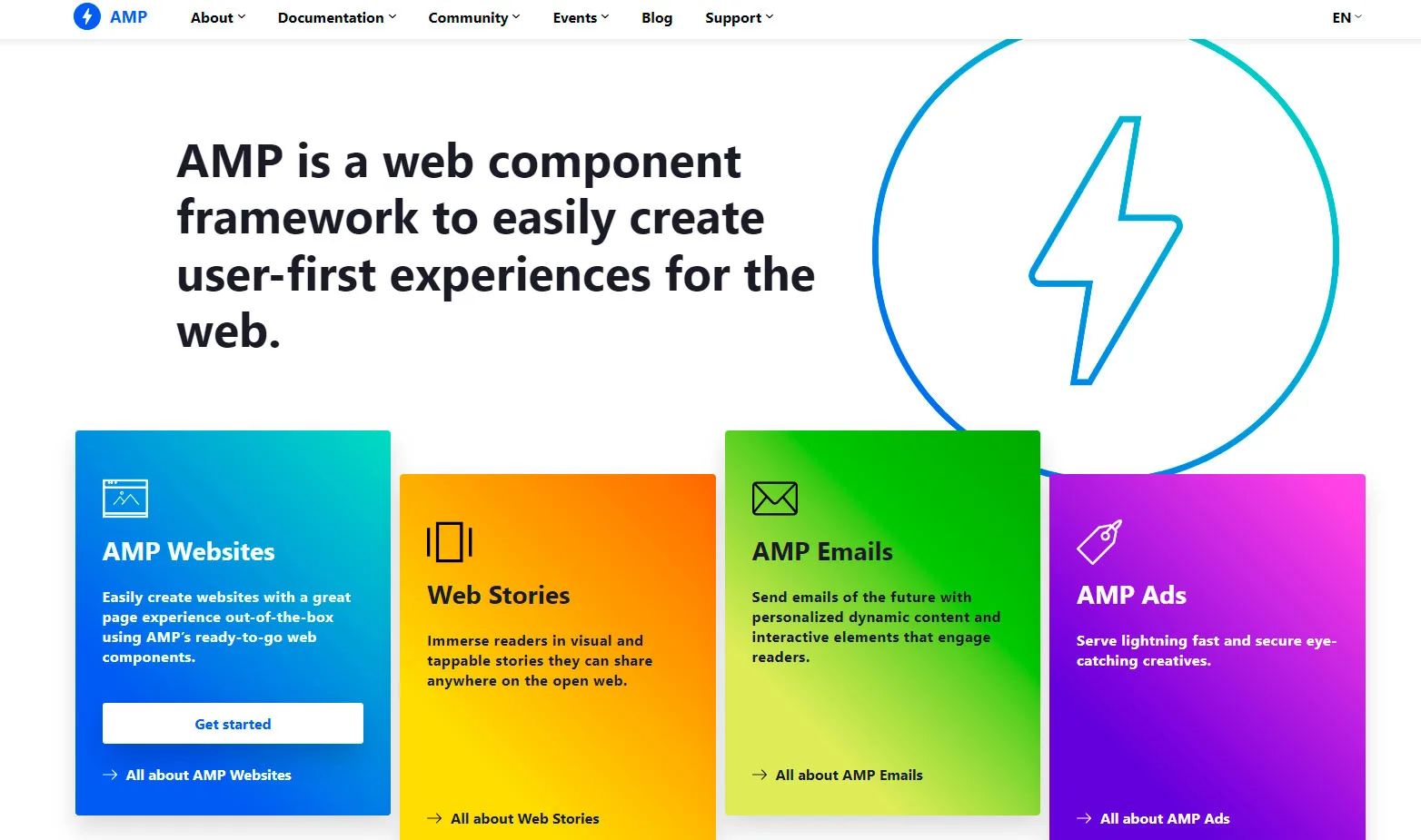
AMP achieves its speed and performance improvements through several techniques:
The implementation of AMP offers several advantages for both users and publishers:
In the fintech sector, AMP is used to enhance the user experience on mobile banking and financial services platforms. Key applications include:
The telecom industry benefits from AMP by improving the performance of mobile websites and customer portals. Notable uses are:
In e-commerce, AMP plays a crucial role in optimizing mobile shopping experiences. Its applications include:
To implement AMP, developers need to follow specific guidelines and best practices:
Implementing technical tools like AMP requires precise application and expertise. It involves a thorough analysis to tailor solutions that best fit the needs of different industries, whether fintech, telecom, or e-commerce. Our agency specializes in providing such expert guidance, ensuring that AMP and other technologies are used effectively to maximize performance and user engagement. By leveraging our experience, businesses can confidently adopt AMP to enhance their mobile web presence and achieve their digital goals.
Our collection of articles, FAQs, and glossaries offers clear, concise explanations of widely used terms and concepts. Beyond definitions, the Handbook MW is a portal to understanding how these terms apply in real-world scenarios.
From research and analysis to strategy and design, we help our clients successfully reach their customers through digital services.
We respond to all messages as soon as possible.